In modern industrial automation control systems, automatic regulating valves, as actuators, play a crucial role. They can automatically adjust the flow rate, pressure, temperature, and other parameters of fluids according to the instructions of the control system, thereby achieving precise control of the process. The concept of 'linkage', as an important concept in the application of automatic regulating valves, refers to the collaborative work of regulating valves with other equipment (such as sensors, controllers, inverters, etc.) to form a closed-loop control, thus realizing the overall automation regulation of the system.
Basic Principle of Linkage
The linkage control of automatic regulating valves is usually based on the principle of feedback control. The basic process is as follows: first, the sensor detects the real-time parameters of the controlled object (such as pressure, temperature, or level in the pipeline) and transmits these signals to the controller; the controller compares the received actual value with the set value, calculates the deviation, and then sends a control signal; this signal drives the actuator, namely the automatic regulating valve, to change its opening, thereby regulating the flow rate or pressure of the medium and making the controlled parameter tend towards the set value.
For example, in a boiler system, if the water level sensor detects that the water level is below the set value, the controller will send a signal to increase the opening of the incoming water regulating valve, increasing the inflow of water, thus restoring water level stability. This is a typical application of the linkage operation of regulating valves with sensors and control equipment.
Two, Common Linkage Control Methods
1. PID control linkage
PID (proportional-integral-differential) control is one of the most commonly used control methods for regulating valves. Through the precise calculation of the PID controller, fine control of the regulating valve's movement can be achieved, reducing overshoot and steady-state error, and improving the response speed and stability of the system.
2. DCS system linkage
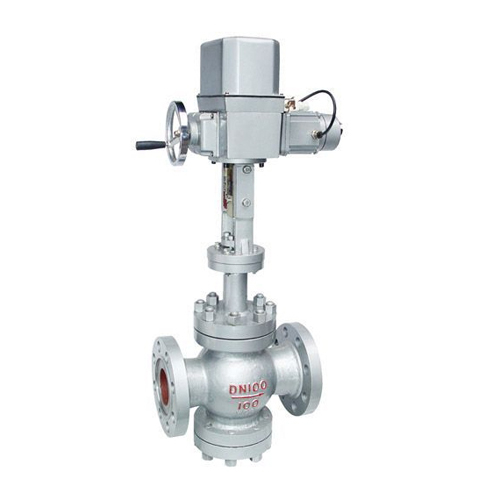
In large-scale industrial systems, Distributed Control Systems (DCS) are often used for centralized control of multiple regulating valves and other equipment. In such systems, regulating valves and DCS exchange data and perform linkage control through communication protocols (such as HART, Profibus, Modbus, etc.), realizing remote monitoring and automated operation.
3. PLC control
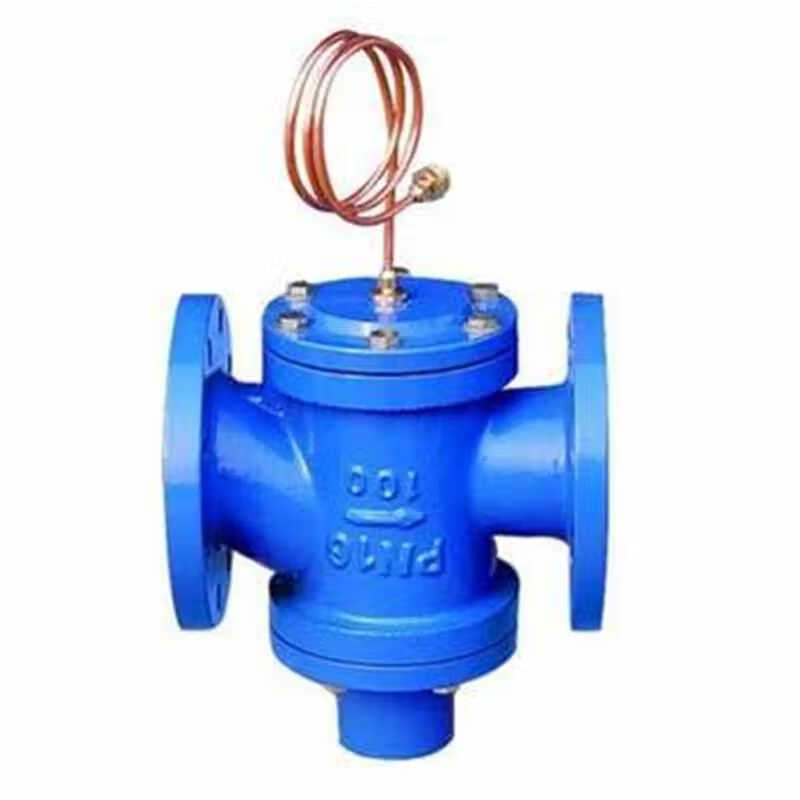
linkage
Programmable Logic Controllers (PLC) are also commonly used in the linkage control of regulating valves. It can control the regulating valves for on/off or analog control according to program logic, suitable for medium and small-scale automation systems.
4. Linkage with variable frequency inverters
In some pump or fan systems, regulating valves are often used in conjunction with variable frequency inverters. By coordinating the control of motor speed and valve opening, more energy-saving and efficient operation can be achieved.
Three, Application Advantages of Linkage Control
1. Improve control accuracy
Through linkage control, the system can dynamically
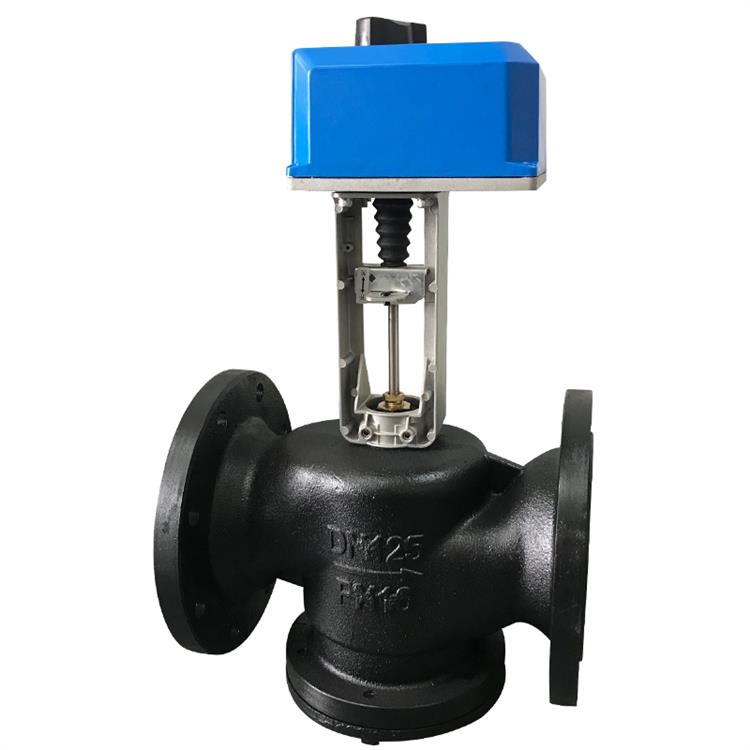
adjust the valve status according to real-time feedback, significantly improving control accuracy and response speed.
2. Enhance system security
In some key processes such as petrochemicals, electricity, pharmaceuticals, and other fields, the linkage control of regulating valves can realize functions such as fault warning and automatic protection, effectively improving the safety and stability of the system.
3. Achieve energy-saving and consumption reduction
A reasonably designed linkage control system can dynamically adjust flow and pressure according to actual needs, avoid energy waste, and achieve energy-saving effects.
4. Convenient for centralized management and remote control
In modern industrial automation systems, linkage control supports data collection and remote operation, facilitating centralized monitoring and management, and improving operation and maintenance efficiency.
Four, Conclusion
With the continuous improvement of industrial automation levels, the linkage control of automatic regulating valves has become an important means to achieve intelligent and efficient production. By working in collaboration with various equipment such as sensors, controllers, DCS, and PLC, it not only enhances the flexibility and reliability of the control system but also provides a strong guarantee for energy conservation and safety in industrial production. In the future, with the development of new technologies such as the Internet of Things and artificial intelligence, the linkage control of automatic regulating valves will become more intelligent and efficient, playing a key role in more fields.

