In industrial automation control systems, control valves, as actuators, are commonly used for precise control of process parameters such as flow, pressure, and temperature. The PID (proportional-integral-derivative) controller, as one of the most commonly used control algorithms, plays a crucial role in the control valve system. In order to achieve a good balance between system stability and response speed, it is crucial to properly adjust the PID parameters.
PID control adjusts the system response through three parameters: proportional gain (P), integral time (I), and derivative time (D). The P item is used to adjust the output based on the current error, the I item is used to eliminate steady-state error, and the D item is used to predict the trend of error changes, thereby improving the stability of the system.
One, The significance of PID parameter tuning
In the application of regulating valves, improper setting of PID parameters may lead to slow system response, severe overshoot, and even oscillation, affecting the stability and safety of the production process. Therefore, reasonable parameter tuning can not only improve control accuracy but also enhance the anti-interference ability and adaptability of the system.
Two, Common PID parameter tuning methods
1. Empirical trial-and-error method
This is the most intuitive and commonly used method, mainly relying on the operator's experience to gradually adjust the parameters. Generally, the P value is set first, and then the I and D items are added for fine-tuning. Although it is less efficient, it is widely used in actual engineering.
2. Ziegler-Nichols method
This method gradually increases the proportional gain until the system appears a continuous oscillation with the same amplitude, and records the critical gain (Kc) and oscillation period (Tc), and then calculates the P, PI, and PID parameter values based on empirical formulas. This method is suitable for linear systems with fast response, but may not be suitable for non-linear or systems with significant lag.
3. Decay curve method
By applying step signals to the system and observing its response curve, the PID parameters can be determined based on the decay ratio of the curve (such as 4:1 or 10:1). Compared to the Ziegler-Nichols method, the decay curve method is more suitable for systems with significant lag or noise.
4. Automatic tuning technology
With the development of intelligent control, many modern control systems have automatic tuning functions. By using software algorithms to automatically identify system characteristics and optimize parameters, the tuning efficiency and accuracy are improved, especially suitable for complex and variable working conditions.
Three, Matters to be noted during parameter tuning
- The importance of system modeling: Understanding the dynamic models of regulating valves and their control objects helps in selecting appropriate tuning methods.
- Consideration of process lag and non-linear factors: Lag effects often exist in actual systems, and the D item should be appropriately adjusted to enhance the response speed.
- Phased debugging: It is recommended to tune the P item first, observe the system response, and then gradually introduce the I and D items.
- On-site debugging and feedback: The theoretical tuning values need to be adjusted slightly based on actual on-site conditions to ensure that the control effect meets the process requirements.
Four, Conclusion
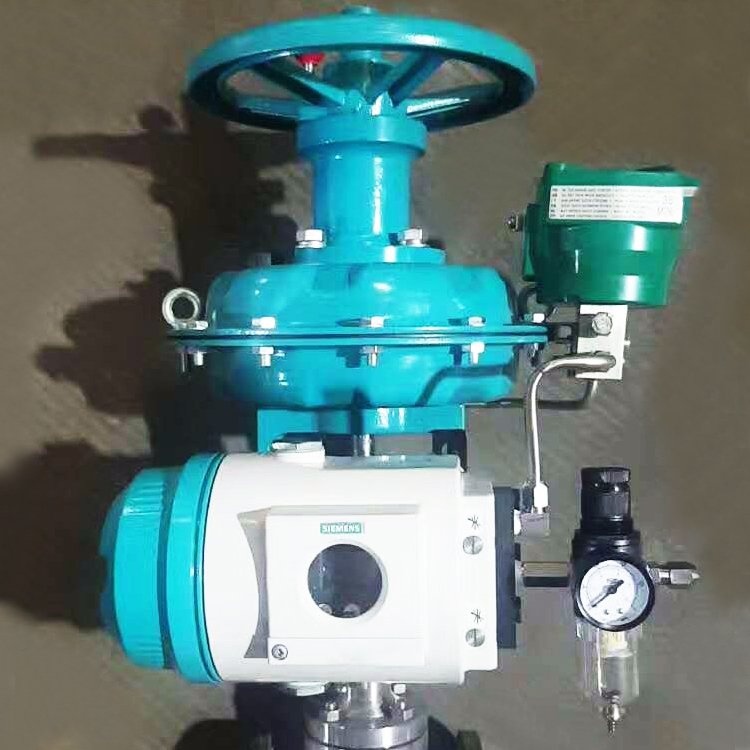
The parameter tuning of PID control for regulating
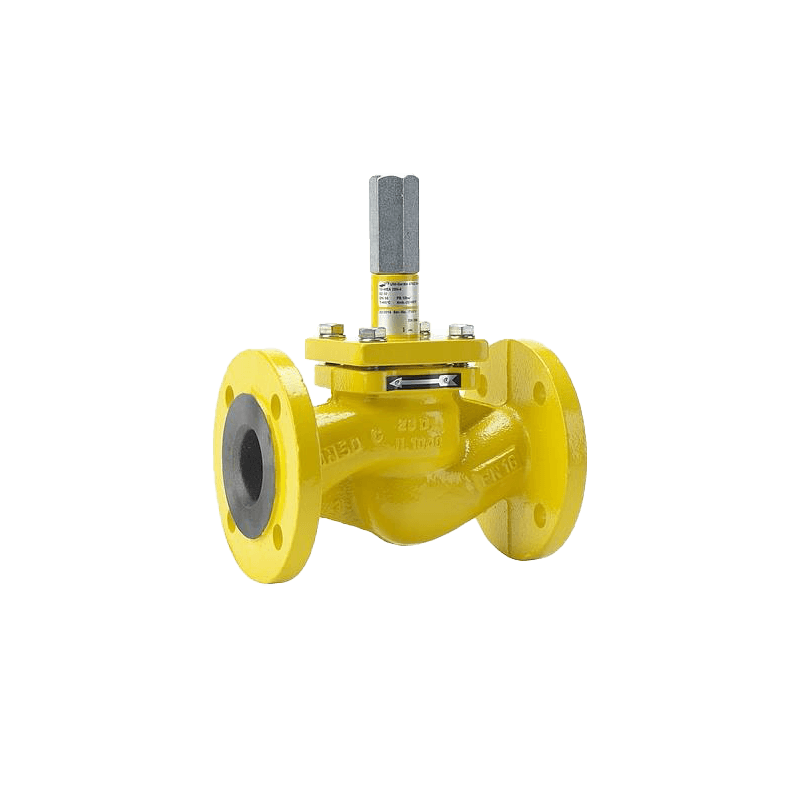
valves is a task that emphasizes both technicality and experience. With the continuous improvement of industrial automation levels, PID tuning methods are also constantly evolving, from traditional trial-and-error methods to modern automatic tuning algorithms, all of which provide guarantees for achieving efficient and stable control. Mastering scientific tuning methods and combining them with flexible adjustments based on actual on-site conditions is the key to improving the control performance of regulating valves.
Through continuous learning and practice, engineers can better master the PID parameter tuning techniques in practical applications, thereby improving the stability and control quality of the entire control system.

