With the rapid development of artificial intelligence technology, the application of deep learning in control systems is becoming increasingly widespread. Traditional control methods, such as PID control and adaptive control, rely on precise mathematical models and expert experience, while deep learning control can automatically learn complex nonlinear relationships through data-driven methods, thereby realizing more efficient and flexible control strategies. This article will discuss the basic architecture of deep learning control systems and their training methods.
1. Basic Architecture of Deep Learning Control
A deep learning control system typically consists of the following components:
1. Perception Module: Used to obtain environmental or system status information (such as sensor data, images, time-series signals, etc.).
2. Deep neural network controller: Based on perceptual information, output control signals through neural networks.
3. Execution module: Apply control signals to the controlled system (such
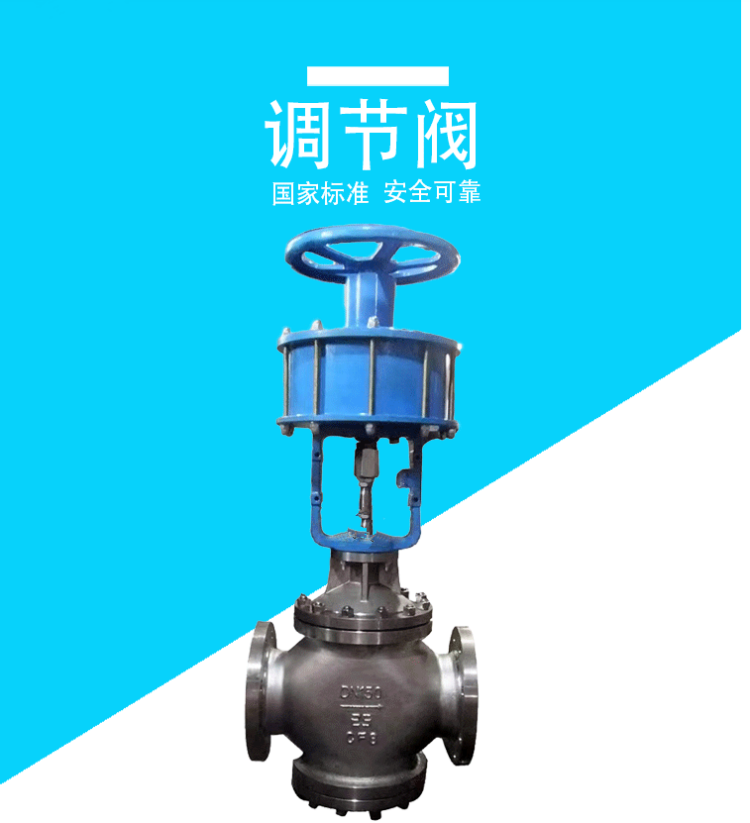
as robots, autonomous driving cars, industrial equipment, etc.).
4. Feedback mechanism: Collect control results and system responses for subsequent model training and optimization.
2. Training methods of deep learning control
The training of deep learning control is usually divided into three methods: supervised learning, reinforcement learning, and imitation learning.
# 1. Supervised learning
Supervised learning is suitable for situations where there are a large number of input-output samples. For example, in industrial control, historical data can be used to train neural network controllers so that they
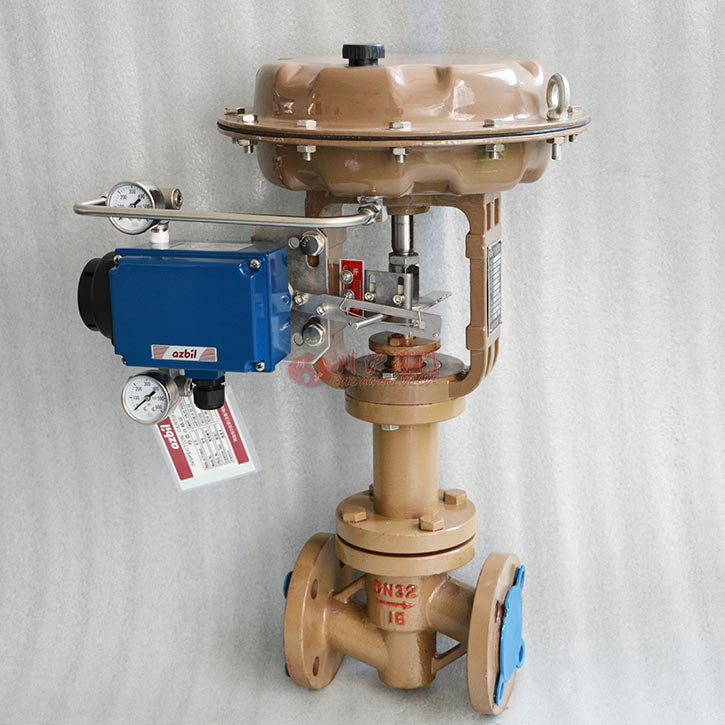
can predict the optimal control actions based on the current state. During the training process, the loss function (such as mean squared error) is used to measure the difference between the predicted output and the expected output, and the network parameters are optimized through the backpropagation algorithm.
# 2. Reinforcement learning
Reinforcement learning is one of the most commonly used methods in deep learning control. Its core idea lies in continuously trying and erroring through interactions with the environment to maximize long-term returns. Typical algorithms include Deep Q-Network (DQN), policy gradient methods (such as A3C, PPO), etc. During the training process, the agent (i.e., the controller) observes the environment state, takes actions, obtains reward signals, and adjusts the strategy according to the rewards. This method is suitable for complex, dynamic systems, such as autonomous driving, robot path planning, etc.
# 3. Imitation learning
Imitation learning is a method of training controllers by imitating expert behavior. Unlike supervised learning, imitation learning can handle situations where expert strategies are unknown and only behaviors can be observed. Common methods include behavior cloning (Behavior Cloning) and inverse reinforcement learning (Inverse Reinforcement Learning). This method can quickly obtain a relatively reasonable controller in the early stage of training, but there may be a problem of over-reliance on expert behavior.
3. Challenges and countermeasures in the training process
1. Difficulty in environmental modeling: The real environment is complex and changeable, and training directly on the physical system is risky. One solution is to train in a simulation environment first and then transfer to the real system (Sim2Real).
2. Low data efficiency: Reinforcement learning often requires a large amount of experimental data. The introduction of transfer learning, meta learning, and other technologies can improve training efficiency.
3. Safety issues: Dangerous actions may occur during the training process. It is possible to introduce safety constraint conditions, safety layer mechanisms, or model-based predictive control to enhance the robustness of the system.
4. Summary
Deep learning control, by integrating the powerful representation ability of deep learning with modern control theory, provides a brand new solution for the control of complex systems. Although many challenges are faced during the training process, with the optimization of algorithms, the improvement of hardware, and the development of simulation platforms, deep learning control is gradually moving towards practical application. In the future, it will play an increasingly important role in fields such as intelligent manufacturing, intelligent transportation, and robotics.

